



For the past several years, artificial intelligence conversations revolved around a familiar pattern: you typed a prompt into a text box, waited a few seconds, and received a generated response. Chatbots and copilot tools acted as intelligent advisors—handy for answering questions or drafting isolated blocks of text, but fundamentally reactive.
That paradigm has shifted dramatically.
Tech communities, enterprise architects, and open-source developers are no longer talking about simple prompt-and-response LLMs. The conversation is now entirely dominated by AI Agents and Autonomous Systems.
Rather than waiting for step-by-step instructions, autonomous agents take high-level goals, break them into multi-step execution plans, call external APIs, query live databases, and self-correct when they run into errors—all without human hand-holding.
Here is why agentic workflows and autonomous systems have taken over modern technology discussions.
1. The Shift from Prompting to Intent (Goal-Oriented AI)
The core difference between traditional assistive AI and autonomous agentic AI comes down to intent delegation.
+-----------------------------------------------------------------------------+
|                      ASSISTIVE AI (CHATBOTS)                                |
|  User Prompt -> Generate Text -> User Manually Executes Next Action         |
+-----------------------------------------------------------------------------+

                                    VS.

+-----------------------------------------------------------------------------+
|                     AUTONOMOUS AGENTIC WORKFLOW                             |
|  User Goal -> [Plan Sub-tasks] -> [Query APIs] -> [Execute Code]            |
|            -> [Evaluate Output] -> [Deliver Finished Result]               |
+-----------------------------------------------------------------------------+
With an assistive model, if you want to deploy a web application, you ask the chatbot for a script, copy it to your local environment, run it, fix terminal errors yourself, and manually wire up your DNS records.
An autonomous system operates on outcomes:
-
You assign a goal: “Deploy our staging build to AWS, verify the health checks, and notify the team on Slack.”
-
The agent initializes a planning loop, executes shell commands, calls cloud provider SDKs, inspects HTTP response codes, and resolves minor deployment conflicts on its own.
This shift—moving from writing code to expressing intent—has fundamentally changed how software lifecycle development and system administration are approached.
2. Standardized Interoperability: The Agent2Agent (A2A) Push
In early deployments, AI agents operated in isolated siloes. Connecting a customer service agent to a supply chain backend required custom, brittle code wrappers.
Today, the adoption of open, interoperable agent protocols—such as the Agent2Agent (A2A) framework—allows independent agents to discover, communicate, and delegate tasks to one another across completely different platform stacks.
-
Multi-Agent Orchestration: Instead of building a single, monolithic model that tries to handle every task, systems now deploy specialized micro-agents.
-
Specialized Delegation: A Database Agent translates incoming natural language requests into complex SQL queries, hands the resulting payload to a Data Visualization Agent, which then passes the finished charts over to a Reporting Agent to compile a final PDF.
This modular architecture mirror microservices, making enterprise agentic platforms far more resilient, scalable, and easy to maintain.
3. Production ROI vs. Pilot Fatigue
Between 2023 and 2025, enterprise IT departments launched thousands of experimental AI pilot projects. However, many of those initial chatbots stalled out at the “cool demo” stage because they required human operators to manually copy and paste information back and forth between business tools.
Autonomous agents solve this friction by directly integrating into underlying database schemas, APIs, and headless browser tools.
                                    +---> [ Database Queries (SQL) ]
                                    |
[ User Defines Goal ] ---> ( Autonomous Agent ) ---> [ External API Calls ]
                                    |
                                    +---> [ Local CLI / Shell Executions ]
Because agents actively handle transactional workflows—such as automating email-based order processing, handling level-1 IT support tickets, or triaging security alerts in a Security Operations Center (SOC)—organizations are seeing tangible, measurable returns on investment in weeks rather than quarters.
4. The Emergent “Agents as a Service” (AaaS) Infrastructure Stack
As autonomous deployments scale, a new ecosystem of developer infrastructure tools has emerged to keep these systems stable, predictable, and safe:
-
Deterministic Guardrails: Platforms now wrap agentic loops with strict schema enforcement (like JSON-mode constraints) and runtime execution sandboxes to ensure an autonomous script cannot execute destructive system commands.
-
Long-Term State Memory: Technologies like vector databases, graph memory trees, and persistent session states allow agents to remember context across days or weeks of multi-step task execution.
-
Human-in-the-Loop (HITL) Checkpoints: High-stakes tasks (such as sending financial transfers or approving legal contracts) automatically pause execution, serving up a structured approval prompt to a human manager before proceeding.
What This Means for Developers and IT Teams
The rise of autonomous systems doesn’t mean developers are obsolete—it means the day-to-day workflow is evolving:
-
Focus on Orchestration and Governance: Rather than writing boilerplate CRUD operations, software engineering effort is shifting toward designing clean API endpoints, setting up agent permissions, and building robust telemetry tracking.
-
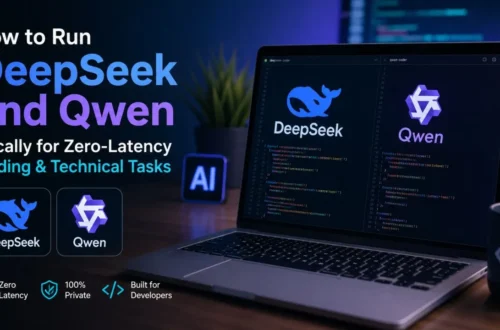
Local Agent Execution: Thanks to efficient quantized open-source models (like Qwen, DeepSeek, and gpt-oss), developers can now run fully functional autonomous agent loops locally on consumer GPU hardware without sending proprietary data to third-party cloud endpoints.
Autonomous AI agents have moved from speculative research papers into production infrastructure. The organizations and developers mastering multi-agent orchestration today are setting the operational standards for the next decade of technology.